

Against a backdrop of economic uncertainty, inflation, rising customer acquisition costs and growing data regulations, Airship, the mobile app experience company, today at Cannes Lions International Festival of Creativity announced a new global report, “The Mobile Consumer 2023.” The research helps brands better understand evolving consumer preferences, behaviours, and expectations in order to accelerate value creation.
Based on a survey of more than 11,000 consumers across ten countries, global consumers are more willing to share all types of information with brands in exchange for personalised interactions and special incentives. Of the 15 different types of information Airship tracked year-over-year, email addresses are the most freely shared at 86% of respondents. This year, “interests relevant to a brand” (78%) displaced “name” as the second most shared information.
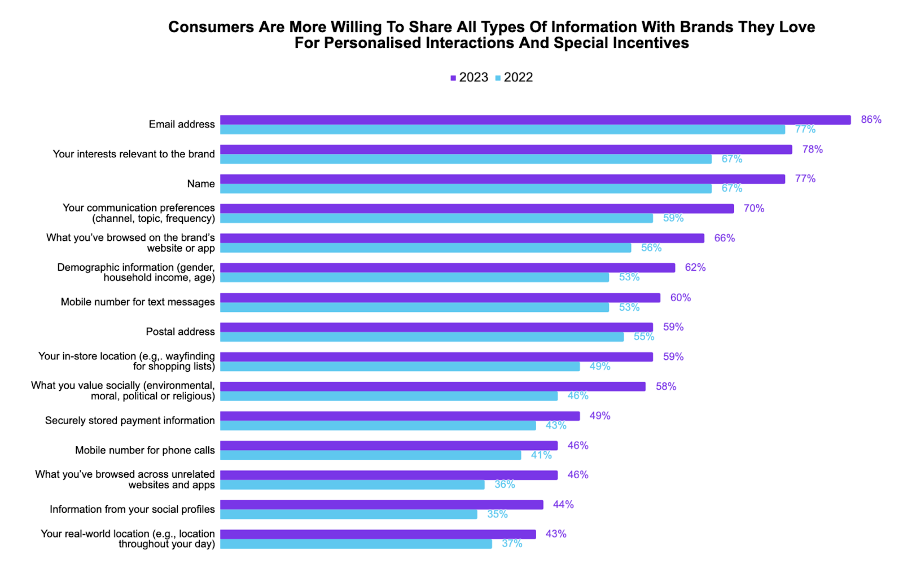
Rounding out the top five types of information consumers will share the most are “their communication preferences” and “what they’ve browsed on a brand’s app or website,” highlighting the importance of a customer-centric approach to brand interactions. In fact, the information seeing the biggest year-over-year gains in consumer willingness to share is “what they value socially (environmental, moral, political or religious).”
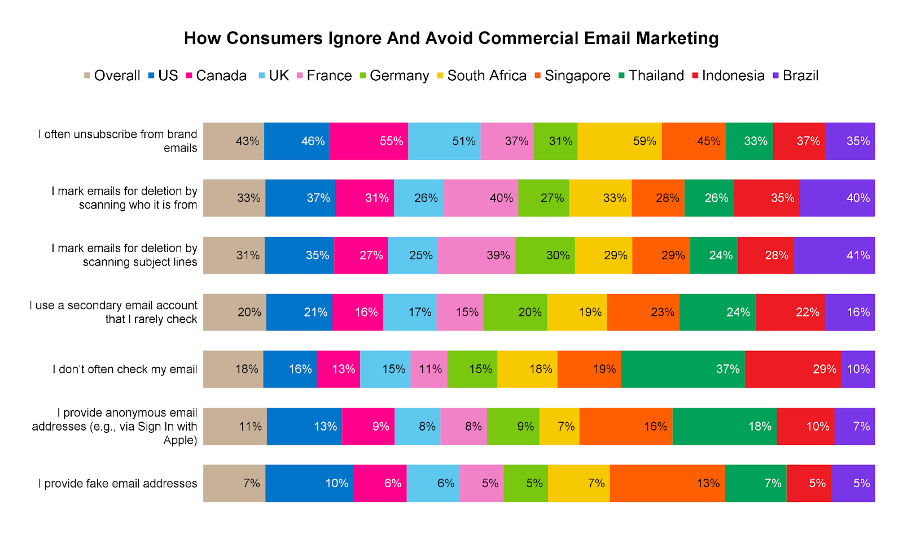
While email addresses are most commonly shared with brands, it’s worth noting that 79% of consumers ignore or delete marketing emails from brands they love at least half the time or more (up 1% year-over-year). Younger generations, led by Gen Z, are less likely than Gen X and boomers to pursue traditional methods of avoiding commercial email — by unsubscribing or deleting emails by scanning sender or subject lines. Instead, they are much more likely to say they don’t often check their email, use a secondary email account they rarely check and use both anonymous email addresses (e.g., via Sign In with Apple) or fake ones.
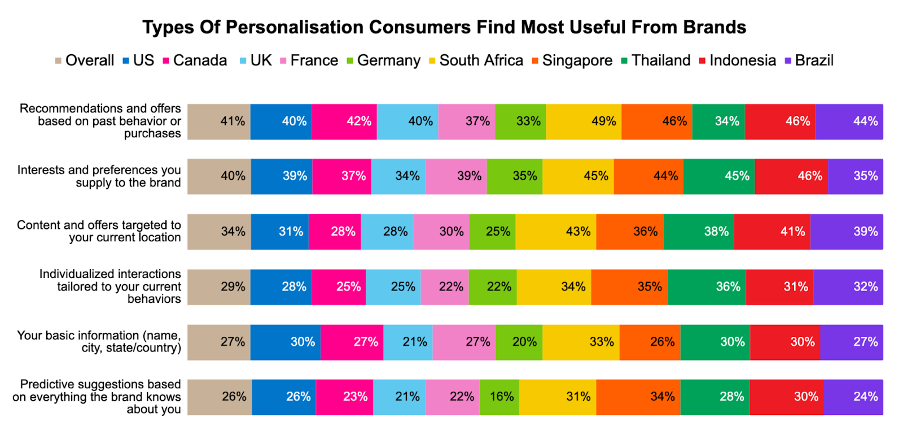
Globally, the top three types of personalisation consumers find to be most useful are “recommendations and offers based on past behaviour or purchases” (41%), “interests and preferences supplied to the brand” (40%), and “content and offers targeted to their current location” (34%). Interestingly, “predictive suggestions based on everything the brand knows about them” ranked lowest among all types of personalisation for all countries other than Singapore. These findings indicate that consumers want experiences personalised to them, but basic information doesn’t go far enough and advanced methods walk a fine line between being helpful and creepy.
When asked about how often they like to receive specific types of app-based messaging from brands, more consumers indicated “immediately, and as often as it happens” as their preferred frequency for five of eight different types of messaging. For seven types of messages where there is year-over-year data, findings show a decline in respondents saying they “don’t want these types of messages” and an increase in those that want messages “only as they’re using the specific app.” While consumers may have varied preferences for the frequencies of app-based messaging, these findings illustrate why it’s important for brands to give customers control over the types of messages they receive, as well as where and how often they get them.

Thomas Butta, chief strategy and marketing officer, Airship., said: “Growing data privacy regulations and advancements from Apple and Android are speeding brands towards a customer-first future, where transparency and control make it easier than ever for customers to shut down brands that aren’t meeting their needs.
“This is a seismic shift for many, compounded by both constantly upleveling customer experience expectations and the impending demise of third-party data. To gain the level of customer understanding necessary to succeed, brands must lean into mobile app experiences that offer always-on utility, convenience and individualised control — all of which reach much deeper into the hearts and minds of customers — allowing brands to respect, reward and serve customers better over time.”
Interested in hearing leading global brands discuss subjects like this in person? Find out more about Digital Marketing World Forum (#DMWF) Europe, London, North America, and Singapore.


